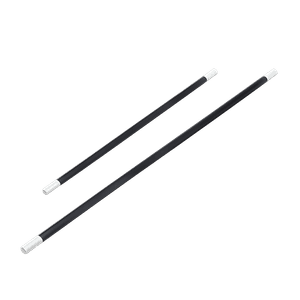
Straight (ED Type) SiC Heating Elements

Straight (ED Type) SiC Heating Elements

ED Type SiC Rods, Heater
ED Type SiC Heating ElementsStraight RodUp to 1625°C

CVSIC Straight (ED Type) Silicon Carbide Heating Element, up to 1625°C (2957°F), high-temperature and corrosion-resistant, suitable for ceramics, electronics, lithium batteries, industrial furnaces, and high-temperature kilns. Offering global wholesale, customization, and OEM/ODM services. Material: High-purity Silicon Carbide (SiC), ≥99% content Type: ED / Straight / ROD / RR / GD Power Supply: 110-480V Production Process: High-quality SiC blank, high-temperature silicon recrystallization Diameter: 8-65mm Operating Temperature: Up to 1625°C (2957°F) Packaging: Inner carton with foam padding, outer export wooden crate Applications: Industrial heaters, furnace heaters After-Sales Service: Global service center support

Description

CVSIC ED Type SiC Rods Description

CVSIC Straight Silicon Carbide (SiC) Heating Elements (ED/Straight/ROD/RR/GD types) are made from high-purity, high-density green silicon carbide using a high-temperature silicon recrystallization process. The hot zone density reaches up to 2.8 g/cm³ and the maximum operating temperature is 1625°C (2957°F).

The uniform diameter design provides high mechanical strength, oxidation resistance, and corrosion resistance, making these elements suitable for high-temperature and harsh environments such as box furnaces, laboratory furnaces, tunnel furnaces, and industrial kilns.

Ordering Information

OD:
Outer Diameter (mm)
HZ:
Hot Zone Length (mm)
CZ:
Cold Zone Length (mm)
OL:
Overall Length (mm)
Resistance:
Resistance Ω
Example:
ED Type, OD=54mm, HZ=1575mm, CZ=419mm, OL=2413mm, Resistance=0.9Ω, denoted as ED Type/54/1575/2413/0.9
Note:
Contact us for other specifications or customization.

Connection Method

Contact Surface Design:
The cold end is coated with aluminum for low-resistance contact, ensuring efficient conductivity.
Electrical Connection:
Secured with flat aluminum braid and spring clips, supporting single or double-end connections for stable installation.
Note:
Select the appropriate voltage (110-480V) and connection method (series, parallel, or star/delta) based on furnace power and temperature requirements. Use an SCR voltage regulator for precise temperature control and longer lifespan.

Application Fields

Box/Laboratory Furnaces:
Meets laboratory and small-scale industrial heating needs.
Tunnel/Muffle Furnaces:
Supports ceramic sintering and powder metallurgy processes.
Electronics Industry:
Used in semiconductor manufacturing and electronic component encapsulation.
Lithium Battery Materials:
Supports high-temperature processing of battery anode and cathode materials.
Rare Earth Phosphors and Precision Casting:
Provides high-temperature stability and uniform heating.
Magnetic Materials/Ceramics:
Ideal for high-temperature heat treatment and material processing.

Advantages

High-Temperature Resistance:
Operates up to 1625°C with infrared emissivity 5-10 times that of nichrome wire for superior heat transfer.
High Mechanical Strength:
Bending strength of 100-120MPa, strong vibration resistance, and no deformation at high temperatures.
Corrosion and Oxidation Resistance:
High-density silicon carbide (2.8 g/cm³) resists acids and alkalis, making it suitable for harsh environments.
Long Lifespan:
Excellent thermal shock resistance and chemical stability, with simple installation and maintenance.
Cost-Effective and Eco-Friendly:
Fast and even heating reduces energy consumption, meeting green industrial standards.
Global Service:
ISO-certified factory, 360-ton annual capacity, offers free samples, and 7-30 day delivery.

Installation Method

1. Inspect Element:
Before installation, ensure the element is free of cracks or damage.
2. Installation Type:
Supports vertical or horizontal installation; high-temperature rigidity eliminates the need for additional support.
3. Fixing Device:
Use ceramic chucks or dedicated clamping devices to avoid direct metal contact.
4. Power Connection:
Hook up to a 110-480V power supply with flat aluminum braid and spring clips to match resistance properly.
5. Ventilation:
Maintain good ventilation in the installation area to prevent localized overheating.
6. Preheating:
Gradually increase power during first use to avoid thermal shock.
7. Regular Maintenance:
Check aluminum coating connections and clamps for looseness or corrosion.

Design Recommendations

Hot Zone Length:
Match the hot zone length to the furnace width to avoid insertion into the furnace wall, preventing ablation.
Cold Zone Length:
Cold zone length should equal furnace wall thickness plus 50-150mm extension for accessory connection.
Furnace Aperture:
The furnace aperture should be 1.4-1.6 times the cold zone diameter to allow free expansion and prevent cracking.
Spacing Design:
Maintain ≥3 times the outer diameter between the element and material/furnace wall and ≥4 times the outer diameter for center-to-center spacing to optimize heat distribution.
Temperature Control System:
Use a PID controller for precise temperature control to extend the element lifespan.
Atmosphere Selection:
Adjust the maximum operating temperature according to the atmosphere type, such as oxidizing or reducing, and consult the technical team for optimal configuration.

Customization Services

Size Customization:
Adjust the outer diameter and hot/cold zone length to fit your furnace design.
Resistance Optimization:
Customize resistance to match 110-480V power configurations.
Special Coatings:
Offer oxidation-resistant or corrosion-resistant coatings for enhanced performance in harsh environments.
OEM/ODM Services:
Support bulk wholesale, free samples, no minimum order quantity, and 7-30 day delivery.
Technical Support:
Provide expert guidance and thermal simulation for selection and setup.

Ready to order or need a custom spec?

Open LINE chat