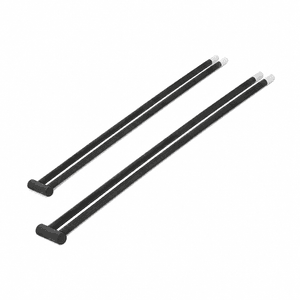
U-Type SiC Heating Elements

U-Type SiC Heating Elements

U-Shaped SiC Heating Element / GDU Type
U-Type SiC Heating ElementsU-Shaped220V / 380VUp to 1625°C

U-shaped SiC heating elements reach up to 1625°C (2957°F) with energy-efficient and durable performance for pusher kilns, trolley furnaces, box furnaces, muffle furnaces, vacuum furnaces, and other high-temperature kilns. CVSIC offers wholesale supply, customization, and global technical support. Material: High-purity silicon carbide (SiC), ≥99% content Shape: U-Shaped SiC Heating Element / GDU Type Power Supply: 220V / 380V Manufacturing Process: High-quality silicon carbide blank, high-temperature silicon carbide recrystallization Diameter: 8-65mm Operating Temperature: Up to 1625°C (2957°F) Packaging: Inner carton with foam filling, outer export wooden crate After-Sales Service: Global service center support

Description

U-Shaped SiC Elements Description

CVSIC U-shaped silicon carbide heating elements (GDU type) feature two equal-diameter SiC rods sharing a single cold end, designed for high-temperature, high-uniformity kilns.

The hot zone reaches up to 1600°C and the maximum operating temperature is 1625°C (2957°F), offering energy savings, long service life, and straightforward installation and replacement. They are suitable for pusher kilns, trolley furnaces, box furnaces, and other periodic electric furnaces.

Ordering Information

OD:
Outer diameter (mm)
HZ:
Hot zone length (mm)
CZ:
Cold zone length (mm)
OL:
Overall length (mm)
A:
Shank spacing (mm)
Resistance:
Resistance Ω
Example:
U-shaped, OD=20mm, HZ=300mm, CZ=400mm, OL=700mm, A=60mm, Resistance=2.24Ω
Note:
Resistance is tested at 1000°C in open air for calibration purposes only. Contact us for other specifications or customization.

Connection Method

220V:
Recommended for series or parallel connection; make sure both rods have matching resistance in series to boost lifespan.
380V:
Commonly uses star connection for small furnaces or delta connection for large furnaces and high-power needs.
Note:
Inconsistent resistance may cause premature failure. Select the appropriate connection method based on furnace power and consult the technical team for optimized configurations.

Application Fields

Pusher Kilns:
Delivers consistent high heat for better ceramic and material sintering.
Trolley Furnaces:
Supports large-scale heat treatment, ideal for metal processing.
Box Furnaces:
Meets laboratory and small-scale industrial heating needs.
Muffle Furnaces:
For laboratory sample calcination and material analysis.
Vacuum Furnaces:
For high-temperature processes in inert gas or vacuum environments.
Other High-Temperature Kilns:
Suitable for glass manufacturing, semiconductor sintering, and other high-temperature processes.

Advantages

Energy-Saving and Efficient:
A U-shaped design with a hot zone up to 1625°C reduces energy use and boosts heating efficiency.
Long Lifespan:
High-purity SiC material resists thermal shock and oxidation, cutting down on replacement frequency.
Easy Installation:
A single-end connection simplifies wiring and maintenance, making it suitable for complex kiln structures.
High-Temperature Performance:
Maximum operating temperature of 1625°C (2957°F), meeting challenging industrial demands.
Global Support:
Backed by overseas service centers for fast response and technical guidance.

Installation Method

1. Inspect Elements:
Check for cracks or damage before installation.
2. Fixing Device:
Use ceramic clamps or dedicated fixtures to avoid direct metal contact.
3. Power Connection:
Choose series, parallel, or star/delta connection based on voltage, ensuring matched resistance.
4. Ventilation:
Keep the installation area well-ventilated to prevent localized overheating.
5. Preheating:
Slowly ramp up power at first to avoid thermal shock.
6. Regular Maintenance:
Check wiring and fixtures for looseness or corrosion regularly.

Design Recommendations

Hot Zone Length:
Should match furnace chamber width to avoid insertion into furnace walls, preventing ablation.
Cold Zone Length:
Should equal furnace wall thickness plus 50-150mm extension for accessory connection.
Furnace Aperture:
Use 1.4-1.6 times the cold end diameter to allow expansion and avoid cracking.
Spacing Design:
Element-to-material or element-to-wall spacing should be at least 3 times OD; element center spacing should be at least 4 times OD.
Rotation Flexibility:
Ensure elements can rotate 360° to avoid stress concentration.
Temperature Control:
Use a PID controller for precise temperature regulation to prolong element lifespan.

Customization Services

Size Customization:
Adjust outer diameter, hot/cold zone lengths, and shank spacing to match furnace designs.
Resistance Optimization:
Tailor resistance to fit your power configuration.
Special Coatings:
Provide anti-oxidation or corrosion-resistant coatings for harsh environments.
Bulk Supply:
Support large-scale wholesale with fast delivery and consistent quality.
Technical Support:
From choosing the right element to installation, expert guidance and thermal simulation services are available.

Ready to order or need a custom spec?

Open LINE chat